
From Technician to Leader: Career Pathways in Laboratory Medicine
By Dr. Arpan Gandhi
www.drarpangandhi.org
arpangandhi@gmail.com
Laboratory medicine is often seen as purely technical. Behind every accurate report stands a technician, scientist, or pathologist whose growth defines laboratory quality. Many talented professionals spend their careers executing tasks, never groomed to lead. The diagnostic industry needs leaders at every level.
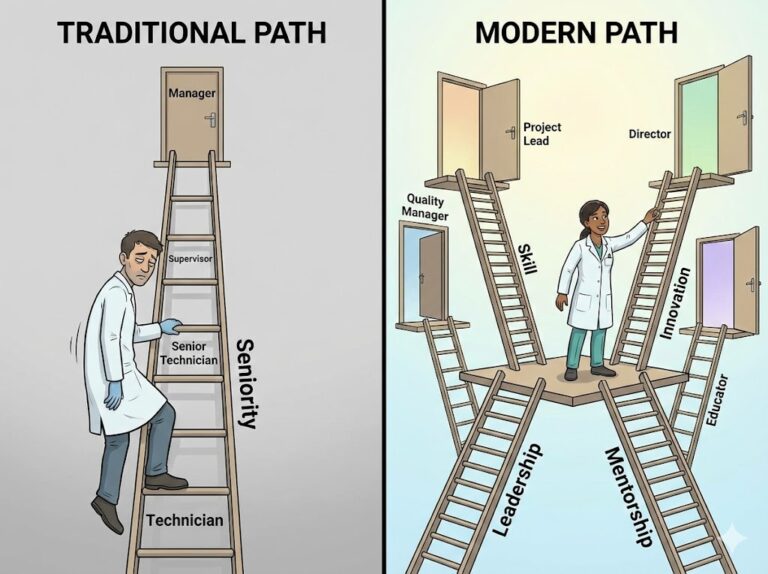
The Traditional Career Model
In most laboratories, growth follows a linear path from technician to senior technician to supervisor to manager. Advancement is based on experience and technical skill, while leadership potential is ignored. As a result, capable professionals stagnate, promotions become seniority-driven, burnout increases, and innovation suffers.
Technical Skills Are Not Leadership Skills
Technical excellence does not translate automatically into leadership. Leadership requires communication, decision-making, emotional intelligence, and ethical judgment.
What a Modern Career Path Should Look Like
Laboratory medicine needs structured leadership pipelines.
Early Identification of Potential
Leaders must identify ownership mindset, curiosity, problem-solving ability, and mentoring attitude.
Formal Leadership Training
People management, communication, quality leadership, financial literacy, and ethics must be part of training.
Exposure Beyond the Bench
Future leaders must participate in audits, SOP development, incident investigations, and clinician interactions.
Mentorship Culture
Senior professionals should actively mentor juniors and guide growth.
Final Thought
The future of diagnostic medicine will be shaped by people who lead it. Every technician has leadership potential if given opportunity.