
What I Learned Building Diagnostic Networks Across India
By Dr. Arpan Gandhi
www.drarpangandhi.org
arpangandhi@gmail.com
Over three decades in diagnostic laboratory medicine, I have had the privilege of working with standalone laboratories, large corporate diagnostic chains, and hospital-based diagnostic services across India. Each setting brought unique challenges and valuable lessons. Every expansion required careful planning, and every success carried insights that cannot be learned from textbooks or conferences. Building diagnostic networks is not only about growth in numbers. It is about sustaining quality, ethics, and patient trust while expanding operations across multiple locations.
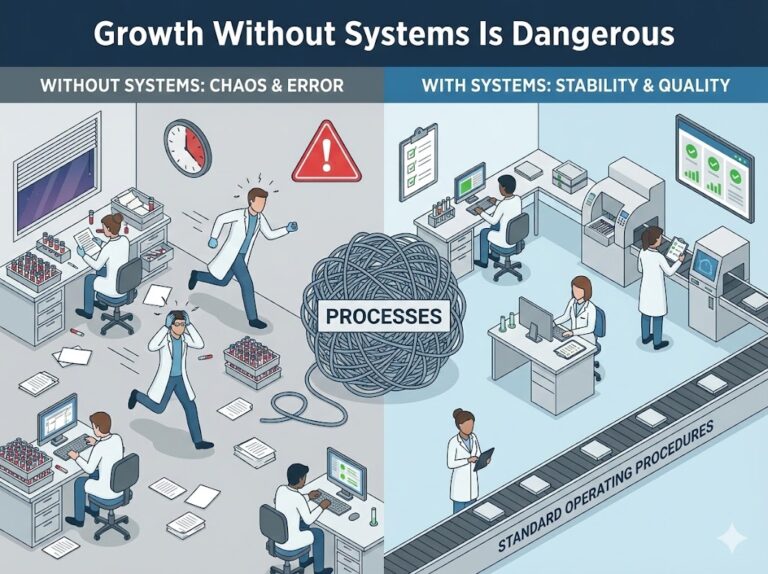
Growth Without Systems Is Dangerous
Rapid expansion without strong systems leads to chaos. When laboratories grow faster than their processes, quality drops, errors increase, and teams feel overwhelmed. Scaling must always be supported by well-defined standard operating procedures, structured training programs, and strong governance frameworks. Systems create stability and ensure that quality does not depend on individuals but on processes.
Standardization Is the Backbone of Networks
Standard operating procedures ensure consistency across all locations. Without standardization, every lab functions differently, leading to variation in reporting, turnaround time, and quality outcomes. Uniform SOPs, common quality indicators, and centralized monitoring are essential for maintaining credibility. Standardization also simplifies training and audits and improves patient confidence in the laboratory brand.
Training Must Be Continuous
One-time induction training never works. Diagnostic medicine evolves rapidly, and continuous education is mandatory. Regular refresher programs, competency assessments, and skill upgrades must be part of the laboratory culture. Training should cover not only technical skills but also communication, ethics, and patient safety principles.
Culture Beats Technology
The best analyzers fail if the team culture is poor. Machines do not ensure quality. People do. Respect, ownership, accountability, and teamwork matter more than any equipment. A positive work culture reduces errors, improves retention, and increases job satisfaction. Leadership must actively nurture this culture every day.
Leadership at Every Location
Every laboratory site needs a responsible local leader. Central leadership alone cannot manage ground realities. Local leaders understand their teams, regional challenges, and workflow patterns. They serve as the bridge between management and staff. Empowering site leaders improves accountability and decision-making speed.
Clinician Partnership Is Key
Strong communication with clinicians prevents misinterpretation and improves patient care. Pathologists must be accessible for discussions, clarifications, and correlations. Diagnostic reports should never be isolated from clinical context. Partnership with doctors builds trust and improves diagnostic accuracy.
Quality Is a Daily Practice
Quality is not for audits. It is for every report issued every day. Daily internal quality checks, monitoring of indicators, and review meetings ensure continuous improvement. Audits should validate systems, not create fear. Quality is a habit, not an event.
My Final Learning
Building diagnostic networks taught me that growth is easy. Sustaining quality is difficult. Institutions are built by people, not machines. Technology supports us, but leadership guides us.
Final Thought
If you plan to scale your laboratory, build systems first, people next, and technology last. Sustainable growth comes from strong foundations.